
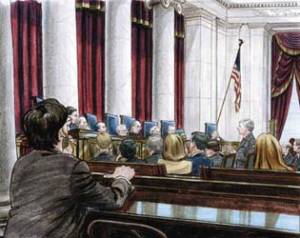
 Before the U.S. Supreme Court in Castillo v. U.S. (2000)
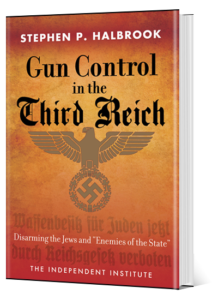
“Stephen Halbrook is an attorney with extensive knowledge of the historical underpinnings of the Second Amendment and practical knowledge of litigating in this rapidly evolving area of law. His writings include topics as diverse as Gun Control in the Third Reich and The Founders’ Second Amendment, and he was heavily involved in Heller and McDonald.”
– U.S. District Judge Michael J. Reagan
Shepard v. Madigan, 2014 WL 4825592, *7 (S.D. Ill. 2014)
Supreme Court Practice
Comments on ATF Regulation Proposals
Practice Areas
Gun Control Act/National Firearms Act
- Firearm technical classifications
- ATF regulatory compliance
- FFL warning conferences, license denials,
and revocations - Forfeitures
- Legal disabilities and restoration of civil rights
- Criminal defense
State and Local Laws
- “Assault weapon” restrictions
- Legal status of firearms
- Challenging restrictions
1968 Hearings on GCA Regulations




Books

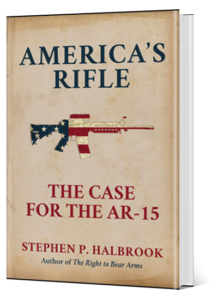
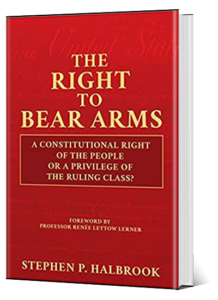
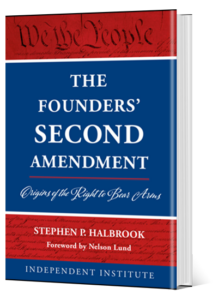
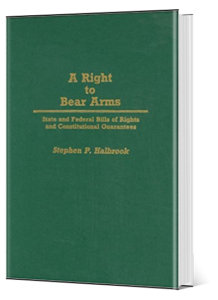
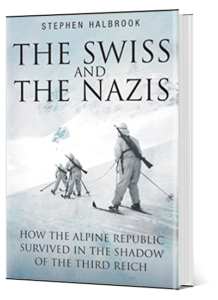
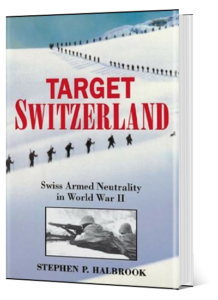

Congressional Testimony
Feinstein Semiauto Ban & Fix NICS
12-6-2017
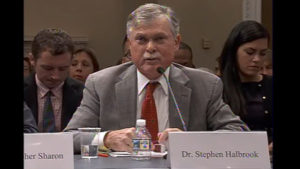
Sportsmen’s Heritage & Recreational Enhancement (SHARE) Act
10-12-2017
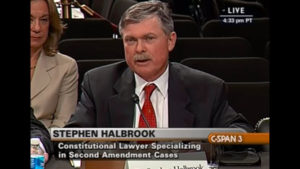
Judge Sotomayor Nomination
Senate Judiciary Committee | 7-17-2009
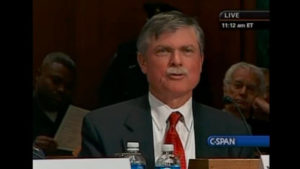
Eric Holder Nomination
Senate Judiciary Committee | 1-16-2009
X
X
X
Scholarly Articles
“How a Fake Citation Misled Courts to Uphold ‘Sensitive Place’ Gun Bans,” 2 Journal of Law & Civil Governance at Texas A&M 433 (2026).
“Birthright Citizenship Requires Parental Allegiance to the United States: The Meaning of ‘Subject to Its Jurisdiction’ in the Fourteenth Amendment” (October 27, 2025).
“The Power to Tax, the Second Amendment, and the Search for Which ‘“Gangster” Weapons’ to Tax,” 25 Wyoming Law Review No. 1 149 (2025) (Special Issue: The National Firearms Act).
“Textualism, the Gun Control Act, and ATF’s Redefinition of ‘Firearm’,” Harvard Journal of Law & Public Policy: Per Curiam No. 32, (Summer 2024).
“Text-and-History or Means-End Scrutiny? A Response to Professor Nelson Lund’s Critique of Bruen,” 24 Federalist Society Review, (Mar. 15, 2023).
“The Second Amendment Was Adopted to Protect Liberty, Not Slavery: A Reply to Professors Bogus and Anderson,” 20 Georgetown Journal of Law & Public Policy 575 (2022).
“Право народа на хранение и ношение оружия: вторая поправка билля о правах сша” [“The Right of the People to Keep and Bear Arms: the Second Amendment in the U.S. Bill of Rights”], 2 Ukrainian Law Journal “Law of the USA” (2013), 240-50.
“The Right of the People to Keep and Bear Arms: the Second Amendment in the U.S. Bill of Rights,” 2 Ukrainian Law Journal “Law of the USA” (2013), 240-50.
“Banning America’s Rifle: An Assault on the Second Amendment?,” 22 Federalist Society Review (June 28, 2021).
“Virginia’s Second Amendment Sanctuaries: Do They Have Legal Effect?,” Regent University Law Review, No. 2, 277 (2020-2021).
Second Amendment Roundup at The Volokh Conspiracy
“Saving Lives at Silver Rail Elementary,” The Volokh Conspiracy, October 19, 2026.
“‘Sensitive Places’ Issue Coming to a Head?,” The Volokh Conspiracy, October 15, 2026.
“5th Circuit En Banc to Rehear Felon Gun Ban Cases,” The Volokh Conspiracy, September 17, 2026.
“ATF’s ‘Firearm’ and ‘Frame or Receiver’ Rules Invalid,” The Volokh Conspiracy, September 9, 2026.
“1st Volley of Briefs Filed in Viramontes,” The Volokh Conspiracy, September 7, 2026.
“The Militia of the Sea,” The Volokh Conspiracy, August 12, 2026.
“$0 Tax Left NFA with No Constitutional Basis,” The Volokh Conspiracy, August 9, 2026.
“New Jersey Rifle and Magazine Bans Bite the Dust,” The Volokh Conspiracy, July 22, 2026.
“Seventh Circuit Decides Barnett,” The Volokh Conspiracy, July 16, 2026.
“Cert Granted on Semiautomatic Rifle Bans,” The Volokh Conspiracy, June 30, 2026.
“Supreme Court Decides Wolford,” The Volokh Conspiracy, June 25, 2026.
“Gun Ban for Pot Users Unconstitutional,” The Volokh Conspiracy, June 18, 2026.
Op-Eds & Short Articles
“How Gun Confiscation Sparked the American Revolution,” America’s 1st Freedom, Jan. 1, 2026.
“America 250: The Tradition of the Armed Citizen Lives On,” American Rifleman 32 (Jan. 2026).
“Gun Control Had a Lot to Do with the Shot Heard ’Round the World,” America’s 1st Freedom, June 23, 2025.
“Can State Semi-Automatic Rifle Bans Last?” America’s 1st Freedom, December 19, 2024.
“The NRA Goes to the Highest Court in the Land to Protect Our Right to Speak,” America’s 1st Freedom, May 24, 2024.
“This Supreme Court Case Also Matters,” America’s 1st Freedom, Jan. 20, 2024.
“The Great Legal War Over Your Freedom,” America’s 1st Freedom, Dec. 23, 2023.
TV Appearances
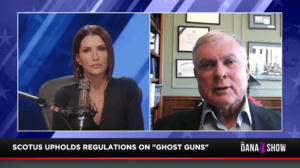
SCOTUS Upholds Regulations on "Ghost Guns"
The Dana Show | 3-28-2025
Joe Biden's Proposed Gun Bans
Newsmax TV | 6-3-2022
The Right to Bear Arms
One America News Network | 6-21-2021
The Right to Bear Arms
Daily Wire | 6-10-2021
COVID-19: Will the Second Amendment Survive the Coronavirus?
Independent Institute | 4-29-2020
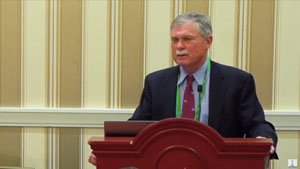
Protecting the Second Amendment
CPAC, National Harbor, MD | 2-27-2020
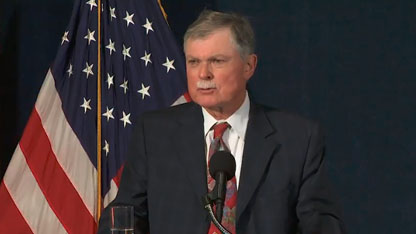
Does the Right to Bear Arms Include a Right to Carry Handguns in Public?
Federalist Society, Washington, D.C. | 1-15-2019
Assault Weapons or Assault on the Constitution?
Federalist Society, Long Island | 4-24-2018
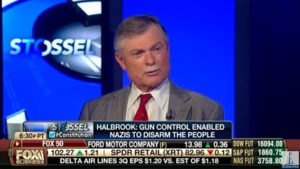
What Does "Well-Regulated Militia" Mean?
Fox Business | 10-15-2014
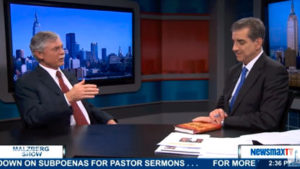
Nazi Gun Control
Newsmax TV | 10-16-2014
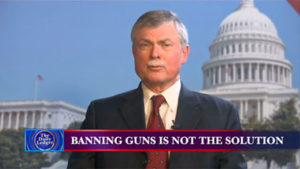
2nd Amendment Rights
The Daily Ledger | 12-23-2013
X
Presentations
Huge NFA Victory Breakdown with Stephen Halbrook – Four Boxes Diner (Aug. 18, 2026)
Stephen Halbrook on How the American Revolution Had a Lot to Do with Gun Control – NRA, “Voices of the Second Amendment (Atlanta),” (Jun. 8, 2025)
Courthouse Steps Oral Argument: Garland v. Cargill – The Federalist Society, (Mar. 5, 2024)
Attorney Stephen Halbrook Discusses the Upcoming Supreme Court Case Garland v. Cargill on Whether Bump Stocks Are Machine Guns – The Federalist Society, “A Seat at the Sitting: The February Docket” (Feb. 15, 2024)
Attorney Stephen Halbrook Talks SCOTUS Re: Biden “Ghost Gun” and “Weapons Part Kits” – Four Boxes Diner (Aug. 13, 2023)
The Case for the AR15 – The Republican Professor (Aug. 1, 2023)
Attorney Stephen Halbrook Breaks Down Current Pistol Brace Fight – Four Boxes Diner (May 22, 2023)
A Year After Bruen, and This Is Happening? – America’s First Freedom (May 20, 2023)
ATF OVERREACH: Stephen Halbrook on How ATF Rules DO NOT = LAW; Defeating the ATF in Court – The Dana Show with Dana Loesch (Mar. 28, 2023)
Instagram Updates
"In the newspaper Memphis Free Speech and elsewhere, along with Rev. Taylor Nightingale, who advised his congregants to obtain Winchester rifles, [Ida] Wells urged members of the black community to defend themselves with arms. Their repeated references to the virtues of the Winchester, and the defensive use thereof by black communities, were well publicized and would have consequences.
"Perhaps in response to such incidents in which blacks defended themselves with effective arms, in 1893, Florida made it `unlawful to carry or own a Winchester or other repeating rifle without first taking out a license from the County Commissioner`; only with a license would a person be `at liberty to carry around with him on his person and in his manual possession` such a rifle. A license required a $100 bond from sureties to be approved by the county commissioner. That would be equivalent to $2,943 in 2021. The average monthly wage for farm labor in Florida in 1890 was $19.35. The law did what it was intended to do when it effectively excluded the poor and African Americans from legal gun ownership. In 1901, the law was amended to add pistols to the list of firearms requiring a license."
From Halbrook, America`s Rifle: The Case for the AR-15, p. 153.
.
.
.
#AmericasRifleTheCaseForTheAR15 #idabwells #blackgunsmatter #winchesterrifle #armeddefense

!["In the newspaper Memphis Free Speech and elsewhere, along with Rev. Taylor Nightingale, who advised his congregants to obtain Winchester rifles, [Ida] Wells urged members of the black community to defend themselves with arms. Their repeated references to the virtues of the Winchester, and the defensive use thereof by black communities, were well publicized and would have consequences.
"Perhaps in response to such incidents in which blacks defended themselves with effective arms, in 1893, Florida made it 'unlawful to carry or own a Winchester or other repeating rifle without first taking out a license from the County Commissioner'; only with a license would a person be 'at liberty to carry around with him on his person and in his manual possession' such a rifle. A license required a $100 bond from sureties to be approved by the county commissioner. That would be equivalent to $2,943 in 2021. The average monthly wage for farm labor in Florida in 1890 was $19.35. The law did what it was intended to do when it effectively excluded the poor and African Americans from legal gun ownership. In 1901, the law was amended to add pistols to the list of firearms requiring a license."
From Halbrook, America's Rifle: The Case for the AR-15, p. 153.
.
.
.
#AmericasRifleTheCaseForTheAR15 #idabwells #blackgunsmatter #winchesterrifle #armeddefense](https://stephenhalbrook.com/wp-content/plugins/instagram-feed-pro/img/placeholder.png)
Now that`s a hat! This 1973 photo shows hunter Bill Van Houten looking out from a pit blind with a full Canada goose decoy rigged onto his cap. Geese have incredible vision, and the slightest movement of a human head will spook a circling flock. By wearing the decoy, any movement looked completely natural from above.
Back before high-tech layout blinds and modern camo patterns, hunters used their creativity to hide from their targets.
.
.
.
#duckdecoy #WaterfowlHunting #DuckHunting #GooseHunting #VintageHuntingphoto

"Dr. Angus McClellan has just posted 151 pages of `Additional Research on Comprehensive Security and Sensitive Places` showing that at the Founding armed security was tied to each of Bruen`s three sensitive places where arms could be restricted. Historical tradition from the American colonies and early states demonstrates that the predicate for banning weapons by the public at courts, legislative assemblies, and polling places was the government`s provision of real protection in fact...."
...
"...McClellan states: `The primary purpose of this additional research is to determine whether all 13 original colonies or early states had armed, government security personnel assigned to doorways at the sensitive places of courthouses/courtrooms, legislative buildings/chambers, and polling places.` A secondary purpose, he continues, is to confirm that courthouses, legislatures, and polling places were indeed `sensitive,` i.e., governments could or did ban weapons there....The research compiles sources showing where bans were enacted with evidence that such places were secured.
"McClellan`s research is truly overwhelming and is supported by hundreds of footnotes. Weapons were not necessarily always banned in the subject places, but they could be; the ultimate point is that these places were secured by government agents. I will mention only one entry illustrative of each of the identified sensitive places.
" `Courthouses. At the trial of Aaron Burr, General James Wilkinson was disarmed in the court by the U.S. marshal to prevent him from intimidating the jury, indicating at least that (1) weapons were or could be banned in court, (2) government officers were present in court to disarm people....` "
The above excerpts are from my Second Amendment Roundup blog post, "Sensitive Places" Issue Coming to a Head? (10/15/26).
Read the post at reason.com/volokh or copy and paste: https://reason.com/volokh/2026/10/15/second-amendment-roundup-sensitive-places-issue-coming-to-a-head/
Link can also be accessed through the home page of my website, stephenhalbrook.com
.
.
.
#sensitiveplacesdoctrine #gunrestriction #firearmslaw #historyandtradition #secondamendmentroundup

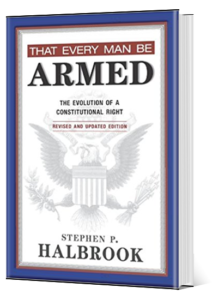
"The development of defensive arms were viewed through the Roman philosophy of nature as a part of the growth of civilization. The poet Lucretius mused: `Tilling of fields, walls, laws, and arms, and roads...--all these arts were learned by practice and the mind`s experience, as men walked forward step by step.` "
From Lucretius`s poem "Of the Nature of Things" (De Rerum Natura), written in the 1st century BC; cited in Halbrook, That Every Man Be Armed: The Evolution of a Constitutional Right, p. 19.
.
.
.
#lucretius #poetandphilosopher #OftheNatureofThings #defensivearms #thateverymanbearmed

[ENGLISH, FRANÇAISE ⬇️] Pierre Laval, o líder fantoche da França de Vichy ocupada pelos nazistas, foi executado nesta data em 1945 por traição. "Após a guerra, procurando justificar as suas ações enquanto aguardava julgamento, Laval escreveu: `A violação mais escandalosa da Convenção do Armistício foi a ultrapassagem pelo exército alemão da linha de demarcação` em 1942, acrescentando que “o armistício durou quatro longos anos, e não tínhamos meios nem armas, a não ser as negociações hoje descritas como "inteligência com o inimigo", para servir de barreira à crueldade e à rapacidade alemãs`. A falta de armas pode ser atribuída, em parte, ao decreto do próprio Laval, de 1935, de que as armas de fogo fossem registradas na polícia e à sua subsequente colaboração com os alemães."
De Halbrook, Desarmamento Na França Ocupada Pelos Nazistas, 179-180.
--
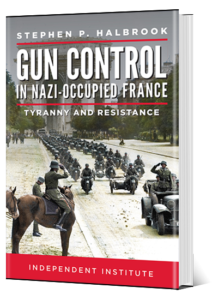
Pierre Laval, the puppet leader of Nazi occupied Vichy France, was executed on this date in 1945 for treason. "Seeking to justify his actions after the war while awaiting trial, Laval wrote: `The most lurid violation of the Armistice Convention was the crossing of the demarcation line by the German army` in 1942, adding that `the Armistice lasted four long years, and we had no means, no weapons, other than negotiations described to-day as "intelligence with the enemy," to serve as a barrier to German cruelty and rapacity.` The lack of weapons could be traced in part to Laval`s own 1935 decree that firearms be registered with the police and his subsequent collaboration with the Germans."
From Halbrook, Gun Control in Nazi-Occupied France, 161-162.
--
Pierre Laval, dirigeant fantoche de la France de Vichy sous occupation nazie, fut exécuté pour trahison à cette date en 1945. « Après la guerre, cherchant à justifier ses actes en attendant son procès, Laval écrira: « la plus flagrante violation de la convention d’armistice fut le franchissement de la ligne de démarcation par l’armée allemande » en 1942, ajoutant que « l’armistice dura quatre longues années, et nous n’avions aucun moyen, aucune arme, outre les négociations qualifiées aujourd’hui « d’entente avec l’ennemi », pour servir [Suite dans les commentaires]

"[T]he Second Amendment and the ongoing love affair of Americans with private firearms ownership have endured for well over two centuries. If some politicians and judges are mystified by the meaning of the words `the right of the people to ... bear arms,` most Americans are not. The Bill of Rights is not just ten commandments that tell the government what it cannot do, but is a testament to instruct the people as to their rights so they can protect them."
From Halbrook, The Right to Bear Arms: A Constitutional Right of the People or a Privilege of the Ruling Class?, p. 10 (hardback edition).
.
.
.
#therighttobeararmshalbrook #rightofthepeople #shallnotbeinfringed #2ahistory #constitutionalright

"After Nat Turner’s slave revolt in 1831, Virginia law was amended to provide: `No free negro or mulatto shall be suffered to keep or carry any firelock of any kind, any military weapon, or any powder or lead….` It repealed the prior law that authorized justices of the peace `to permit slaves to keep and use guns or other weapons,` and that also authorized courts “`o grant licenses to free negroes and mulattoes to keep or carry any firelock of any kind, any military weapon, or any
powder or lead….`
"Such laws, as applied to free persons of color, were upheld partly on the basis that they were not citizens. The North Carolina Supreme Court upheld that state’s ban on the ground that `the free people of color cannot be considered as citizens….` Georgia’s high court held: `Free persons of color have never been recognized here as citizens; they are not entitled to bear arms, vote for members of the legislature, or to hold any civil office.`
These state laws were bolstered by the U.S. Supreme Court in Dred Scott v. Sanford (1857), which notoriously held that African Americans were not citizens and had no rights that must be respected. Chief Justice Roger Taney wrote that if African Americans were considered citizens, `it would give them the full liberty of speech…; to hold public meetings upon political affairs, and to keep and carry arms wherever they went.`”
From Halbrook, America`s Rifle: The Case for the AR-15, pgs. 132-133.
Image: "The Discovery of Nat Turner" by William Henry Shelton (1882)
.
.
.
#natturnerrebellion #dredscott #2ahistory #gunrightsmatter #AmericasRifleTheCaseForTheAR15

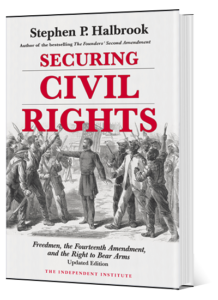
On this date in 1871, U.S. President Grant warned the Ku Klux Klan in South Carolina that martial law would be declared if the KKK did not disperse. Later that year, "numerous South Carolina Klansmen were indicted under the Enforcement Act for conspiring to violate the rights of blacks to assemble, keep and bear arms, and vote, and their freedom from unreasonable searches and seizures. . . . The trial proceedings are significant both as an interpretation of the Second, Fourth, and Fourteenth Amendments, and because they document the Klan`s systematic efforts to disarm blacks."
From Halbrook, Securing Civil Rights: Freedmen, the Fourteenth Amendment, and the Right to Bear Arms, p. 121.
.
.
.
#presidentulyssesgrant #kukluxklanhistory #enforcementact #gunrightsmatter #securingcivilrights

Marathon & Triathlon Photos
 Reykjavík Half-Marathon, 2019
Reykjavík, Iceland

Jungfrau Marathon, 2004
Jungfrau, Switzerland
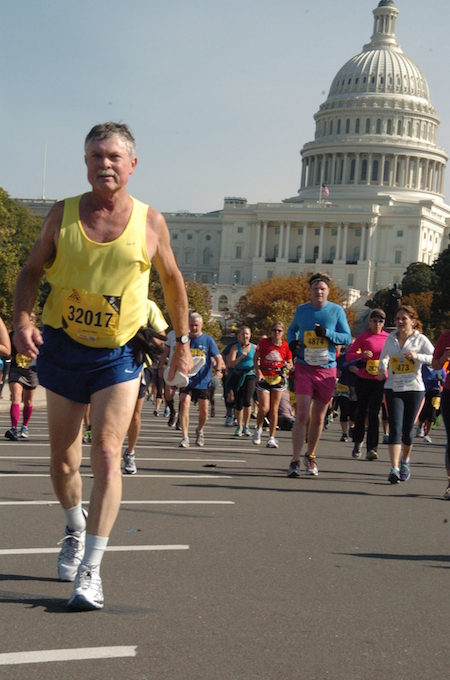
Marine Corps Marathon
Washington, D.C.
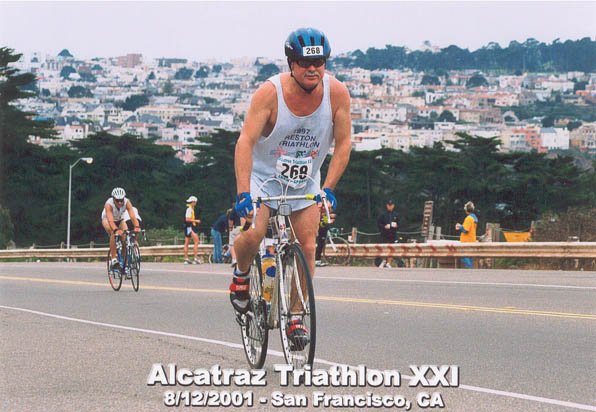
Alcatraz Triathlon, 2001
San Francisco, California

Berlin Marathon, 2019
Berlin, Germany

Berlin Marathon, 2017
Berlin, Germany